
 Image 1 of 4
 Image 2 of 4
 Image 3 of 4
 Image 4 of 4
You may also like
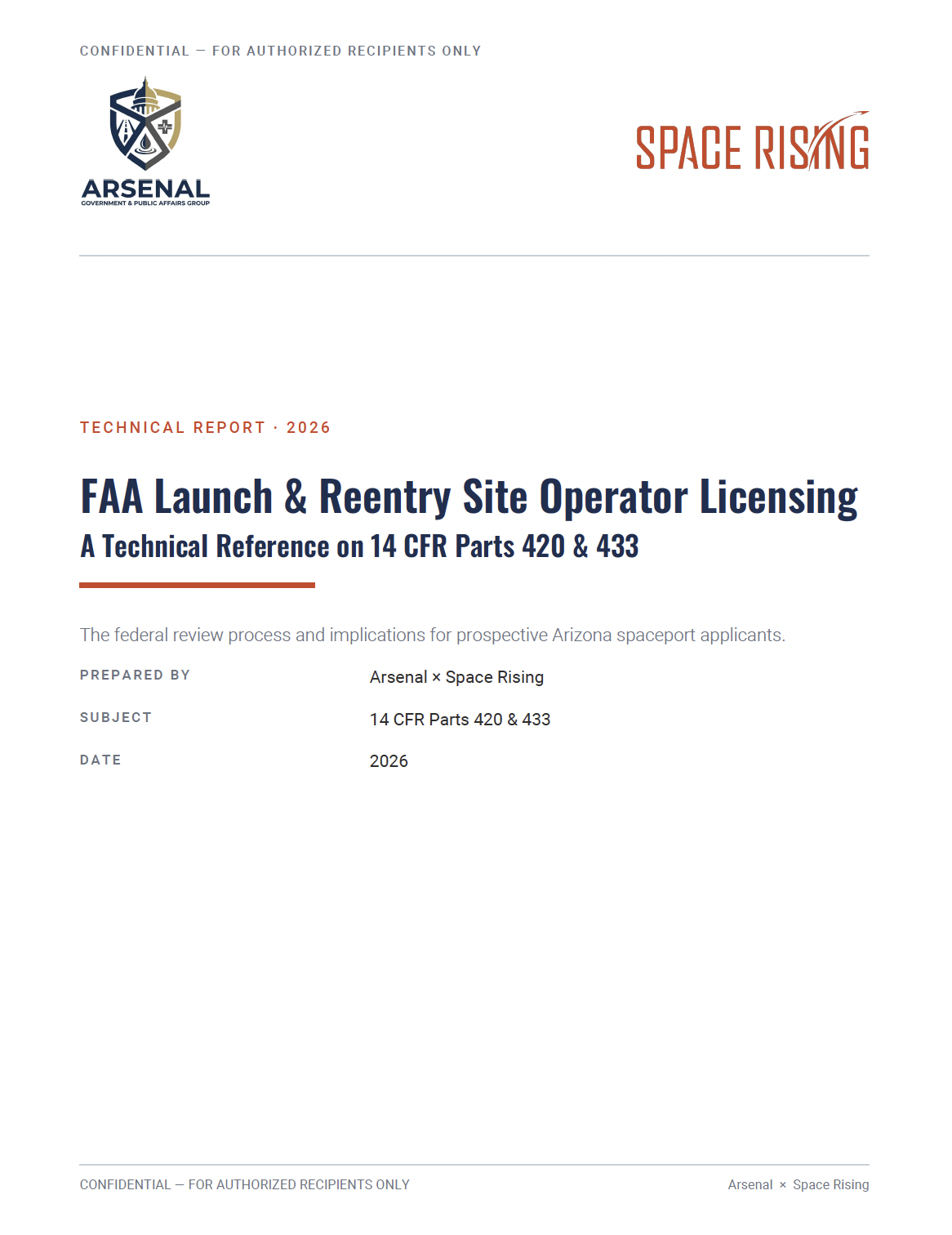
The provided report serves as a technical guide for establishing FAA-licensed spaceports, specifically focusing on the regulatory frameworks of 14 CFR Parts 420 and 433. Prepared for potential applicants in Arizona, the document outlines the rigorous requirements for launch and reentry site operator licenses, emphasizing that these authorizations are distinct from the licenses needed for actual flight operations. Key components include safety location reviews, explosive siting, and mandatory environmental assessments under the National Environmental Policy Act. Through various historical case studies, the text illustrates that while the official FAA review period is 180 days, the actual timeline is often much longer due to complex stakeholder coordination and airspace integration. Ultimately, the sources highlight that prospective sites must navigate a multi-layered compliance matrix involving federal, local, and military interests before beginning operations.

This report is a strategic framework for Arizona-based entities to successfully navigate the complex federal defense funding landscape. It emphasizes that defense appropriations function as mission-driven investments in specific capabilities rather than traditional, localized earmarks or grants. The sources highlight Arizona's dense defense ecosystem, including major installations and a robust industrial base, as a significant advantage for organizations seeking RDT&E funding. To be successful, clients must engage in a multi-year campaign that aligns their technical offerings with Department of Defense priorities across both authorization and appropriations tracks. Ultimately, the guide advises framing every funding request as a vital contribution to national security and warfighter readiness to achieve long-term legislative success.
This report analyzes S. 2888, known as the SPACEPORT Act, a proposed federal bill aimed at modernizing space transportation infrastructure grants. This legislative analysis specifically explores how the act could benefit Arizona, a state with a robust aerospace industry but no currently licensed commercial spaceport. The bill seeks to expand grant eligibility for local entities and authorizes $10 million annually for development, though this amount is noted as insufficient for major projects like the proposed inland spaceport in Yuma. Additionally, the sources detail the rigorous FAA licensing requirements, including environmental reviews and public safety standards, necessary for any site to become operational. Ultimately, the documents frame the legislation as a strategic "door-opener" for new spaceport sponsors rather than a comprehensive reform of the industry.

This report analyzes three critical pieces of federal legislation, collectively known as the Legislative Triad, designed to modernize the outdated regulatory framework governing the American commercial space industry. The Space Infrastructure Act seeks to improve security by designating space as a protected critical infrastructure sector, while the LAUNCH Act focuses on streamlining bureaucratic licensing processes through digital systems and reform. Complementing these, the New Space Age Act proposes restructuring the Department of Transportation to grant the commercial space sector higher institutional status and independence from the FAA. Together, these bills aim to address growing geopolitical competition and ensure that domestic regulations do not hinder the rapid expansion of private space operations. The analysis further examines how these legal shifts will impact Arizona's space economy, particularly regarding federal grants and local spaceport development. Ultimately, the sources describe a coordinated effort to align U.S. policy with the modern demands of global aerospace leadership and national security.

The Arizona Space Technology Market Intelligence Report provides a comprehensive strategic analysis of the state's rapidly evolving aerospace and defense ecosystem as of March 2026. It highlights Arizona’s leadership in satellite manufacturing and missile defense, anchored by major industry leaders like Northrop Grumman, Raytheon, and Honeywell. The text details how a massive surge in federal national security funding, specifically for initiatives like the Space Development Agency’s satellite layers, is driving regional economic expansion. Additionally, the report evaluates the progress of emerging commercial spaceports in Yuma and Sierra Vista and the critical role of research universities in developing a specialized workforce. Ultimately, the sources frame Arizona as a top-tier contender in the global space economy that benefits from a unique concentration of defense-related space technologies.
This report is a strategic 12-month roadmap designed to elevate Arizona’s standing within the federal space economy between 2026 and 2027. Prepared by Arsenal Government & Public Affairs, the plan identifies critical gaps in the state's current approach, such as a lack of unified congressional advocacy and uncoordinated spaceport initiatives in Sierra Vista and Yuma. It proposes five key workstreams to synchronize university research, improve cybersecurity compliance for mid-tier companies, and formalize state-level investment. By establishing a Coordinated Federal Strategy, the document aims to transform Arizona's existing industrial capacity into a competitive force capable of capturing billions in defense and civil space contracts. The ultimate goal is to move beyond individual corporate interests toward a cohesive state ecosystem backed by the Arizona Space Commission.